WOMEN’S SITUATION ON THE LABOUR MARKET IN THE VISEGRAD REGION (2021)
The preparation of this report is the result of a project by a women’s group on the situation of women in the labor market in the Visegrad Region. Years have passed since we noticed a series of significant changes in the social and legal environment, indicating recognition of the issue of women’s role in the market.
The report addresses the most important issues related to the challenges women have been facing for years, which should direct all employers’ attention to implementing regulations and policies promoting gender equality, investing in women in their organizations, being fair and inclusive to all people, regardless of their gender.
The report was prepared with the support of the International Visegrad Fund.
INCREASED EFFICIENCY AND THE STRUCTURE OF THE HEALTHCARE SYSTEM (2020)
Caring for the health of the population and ensuring citizens’ access to healthcare experiences are among the fundamental functions of the state. In Poland, the relevant provisions defining the right of all citizens to equal access to healthcare services and the duties of public authorities in combating diseases are included in the Constitution. The aim of this study was to compare selected characteristics of healthcare systems in Poland and various European countries, both in terms of organization and financing, and the health outcomes achieved.
The report was created with the support of the American Chamber of Commerce in Poland.
PSYCHOLOGICAL AND PSYCHIATRIC CARE FOR THE ELDERLY (2020)
The report by the Lesław A. Paga Foundation summarizes the activities of the “You Are Not Alone” Helpline and the expert panel “Psychological and Psychiatric Care for the Elderly.” It was based on the analysis of anonymous data collected by operators of the “You Are Not Alone” Helpline for Seniors.
The author of the report is Magdalena Maciejewska, an Alumna of the Lesław A. Paga Foundation.
DEPOSITS OF DIGITAL WEALTH IN THE SERVICE OF PATIENTS (2019)
The report was prepared by the Alumni of the “Healthcare Leaders” project of the Lesław A. Paga Foundation. Its main theme is the utilization of data potential in the healthcare sector – an important and still not fully utilized resource. Its significance in the era of digital transformation, along with the development of modern technologies, is expected to steadily increase.
FINTECH IN THE CEE REGION (2019)
The report addresses the technology themes such as artificial intelligence, blockchain, open banking, and API, analyzing their impact on the future of the financial sector. These trends are central to the current changes in the sector, dynamically shaping its competitive environment. The increasing number of startups in the FinTech industry is exerting more significant pressure on traditional financial institutions and requires them to revise their strategies. The information in the report also reflects the regional nature of the Forum, focusing attention on the countries of the Visegrad Group.
DEMAND FOR MEDICAL STAFF (2017)
This study was created as part of a partnership project between the Ministry of Health and the Lesław A. Paga Foundation, serving as an expert commentary on the report “Health Workforce Planning Methodologies across EU.” The document analyzes the staffing policy in the field of medical professions implemented by the Ministry of Health. Special attention was given to the medical and nursing staff, whose deficits are a Europe-wide problem. The document also contains recommendations, the implementation of which could significantly improve the staffing policy for medical professions.
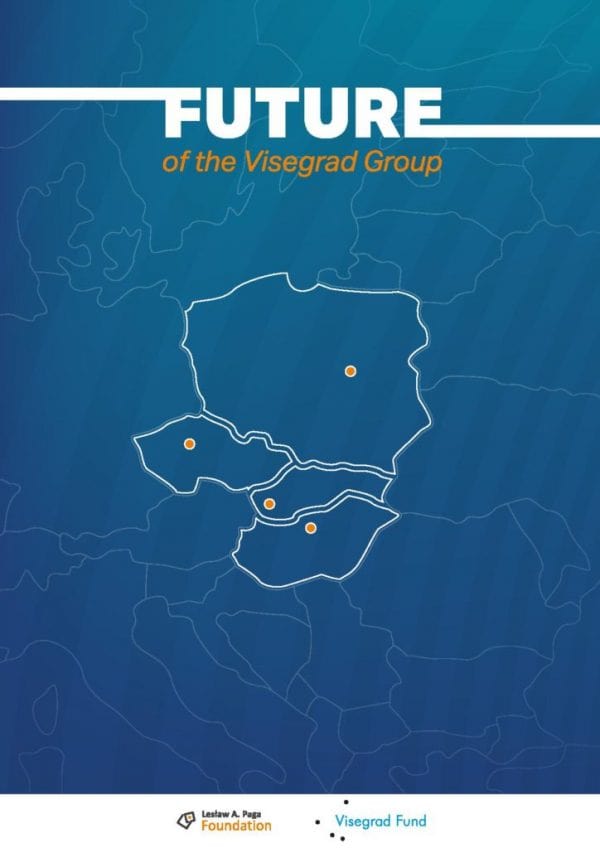
FUTURE OF THE VISEGRAD GROUP(2016)
The report presents a vision for the economic development of the V4 in the fields of entrepreneurship, finance, energy, and infrastructure from the perspective of the Foundation’s Alumni. A brief discussion on the adoption of the euro as a common currency in all Visegrad countries was also prepared. We hope that in the coming months and years, we can rely on our recommendations and actively participate in the ongoing transformation of our economies.
COOPERATION AS THE KEY TO EFFECTIVE HEALTHCARE (2012)
Collaboration between representatives of various medical professions has become the foundation of modern healthcare systems. This is significantly influenced by the development of medical sciences, pharmaceutical sciences, and health sciences. For several decades, there has been a shift away from the paternalistic model of healthcare, where the central focus is the needs of medical workers (doctors, nurses, etc.), towards a system where the patient’s well-being and needs are paramount. It seems necessary to implement transparent regulations into the Polish legal system, which would clearly indicate areas of cooperation while respecting the obvious autonomy of each profession.” – Damian Świeczkowski, MSc in Pharmacy, report coordinator.
Ignacy Morawski, until recently known “only” as the Chief Economist of Puls Biznesu, is now also the Deputy Editor-in-Chief and a true journalist at heart. He inspires, explains, and collaborates closely with the editorial team, unable to imagine a day without writing his own macroeconomic commentary or in-depth analyses on economic issues.
Brunon Bartkiewicz
Brunon Bartkiewicz has been associated with ING Bank Śląski since the early 1990s. He has served as President of the Management Board several times and was reappointed to this position in 2016. As he emphasizes:
“Promoting positive change always starts with ourselves. In our operations, we undertake initiatives aimed at reducing our negative impact on the environment. We also see our role in supporting clients in their environmental transformation. At the same time, we help them be entrepreneurial and manage their finances. We act for the benefit of society and care for the wellbeing of our employees. In line with our mission, we want to help clients stay one step ahead – in life and in business – because the future is our shared responsibility.”
Aureliusz Górski
Founder and CEO of CampusAI – an innovative ecosystem and educational platform designed to promote ethical, effective, and responsible learning of artificial intelligence tools within the collaborative Me+AI model of human-technology interaction. Since 2006, Aureliusz Górski has been creating new ventures and developing innovative companies within existing organizations, combining visionary thinking with technical expertise and strong business acumen.
His areas of expertise include strategy design, design thinking, programming, fundraising, and management, which allow him to independently prototype ideas and build interdisciplinary teams. Leveraging these skills, he has successfully launched several enterprises, securing over 70 million dollars in funding and recruiting more than 250 skilled professionals.
He is the co-founder of Poland’s first coworking network and startup incubator (AIP Business Link), an innovation center for rapidly growing companies (CIC Warsaw), and a foundation promoting inclusive innovation (Venture Café Warsaw Foundation). His public involvement also includes membership in the Council of the City of Warsaw, participation in developing the Integrated Territorial Investments Strategy, and expert contributions to the **#Warsaw2030 strategyIn 2022, his accomplishments were recognized by Manager magazine, which honored him with the prestigious Manager Award.
Zofia Kierner
Zofia Kierner is a young social entrepreneur, guest lecturer at Harvard University and UC Berkeley, and a recipient of prestigious awards such as VOGUE Leader, Forbes 30 under 30, and 25 under 25, as well as a Rafał Brzoska Foundation scholarship holder. At the age of 15, she founded the Girls Future Ready Foundation, an educational organization that supports thousands of young women and runs numerous international projects. Her initiatives have impacted the lives of 80,000 girls and generated over 25 million dollars in social value.
Later, she founded 50one – a boutique impact agency that helps companies and individuals design and execute their social initiatives through a “Foundation as a Service” model. Her mission is to close the gap in social impact. She holds a degree in Data Science and Business Economics from the University of California, Berkeley.